

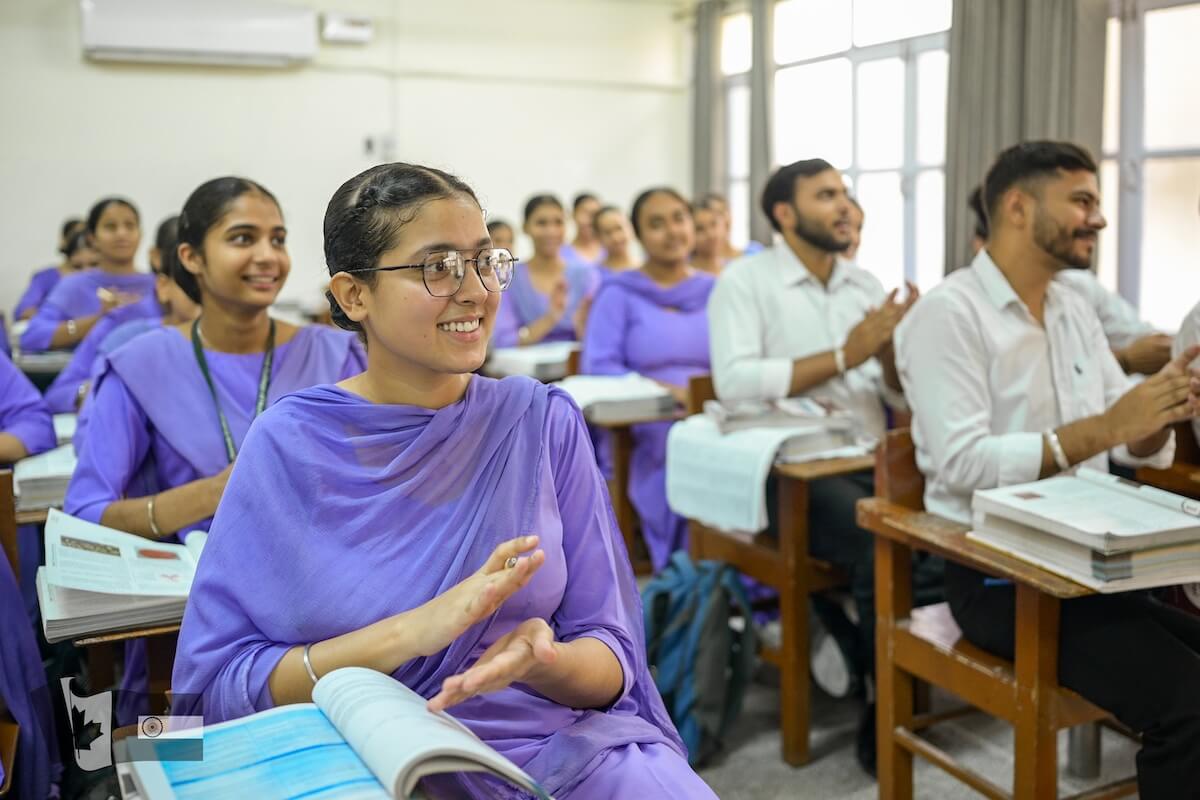
Harjot Kaur is the daughter of two deaf parents from Ladian, a small village in rural Punjab, India, where she was also born and raised. From birth, she learned to use Punjabi Sign Language (PSL). Her spoken Punjabi came through interactions with extended family.
Before she was born (in 2005), her grandfather (a farmer), ensured his deaf, teenaged son would pick up skills in agriculture and metalwork—anything he could learn to provide for himself. Education was not an option for Harjot’s father. He remains illiterate to this day. Her mother was schooled up to grade six.
But they wanted something different for Harjot and her siblings.
“They always teach me to study hard and to fulfill my dreams and gain success in life,” she says.
Growing up as her family’s hope
Harjot’s step sister, four years her senior, was the child of her father’s first marriage. She wasn’t around much; the family decided she would grow up in her grandmother’s home.
Harjot’s two younger sisters were born three and eight years after her. The family lives in a four-room house with relatives.
Functionally, Harjot was raised like the eldest child. There was no getting around the role of being translator for her parents. For every doctor’s visit and family argument, Harjot remains the middle person—sometimes even being scolded in the ‘fire’ of heated debate!
Being the eldest sibling also meant being the ‘hope’ of her family.
The family’s financial resources were poured into Harjot’s education.
They opted for a free, government-run elementary school. But high school was too important; they borrowed from uncles and did whatever they could to pay her tuition at Guru Nanak Mission Public School—a private, but non-profit option. It offered Harjot a nationally-recognized diploma.
Making it to nursing college, but not without struggles
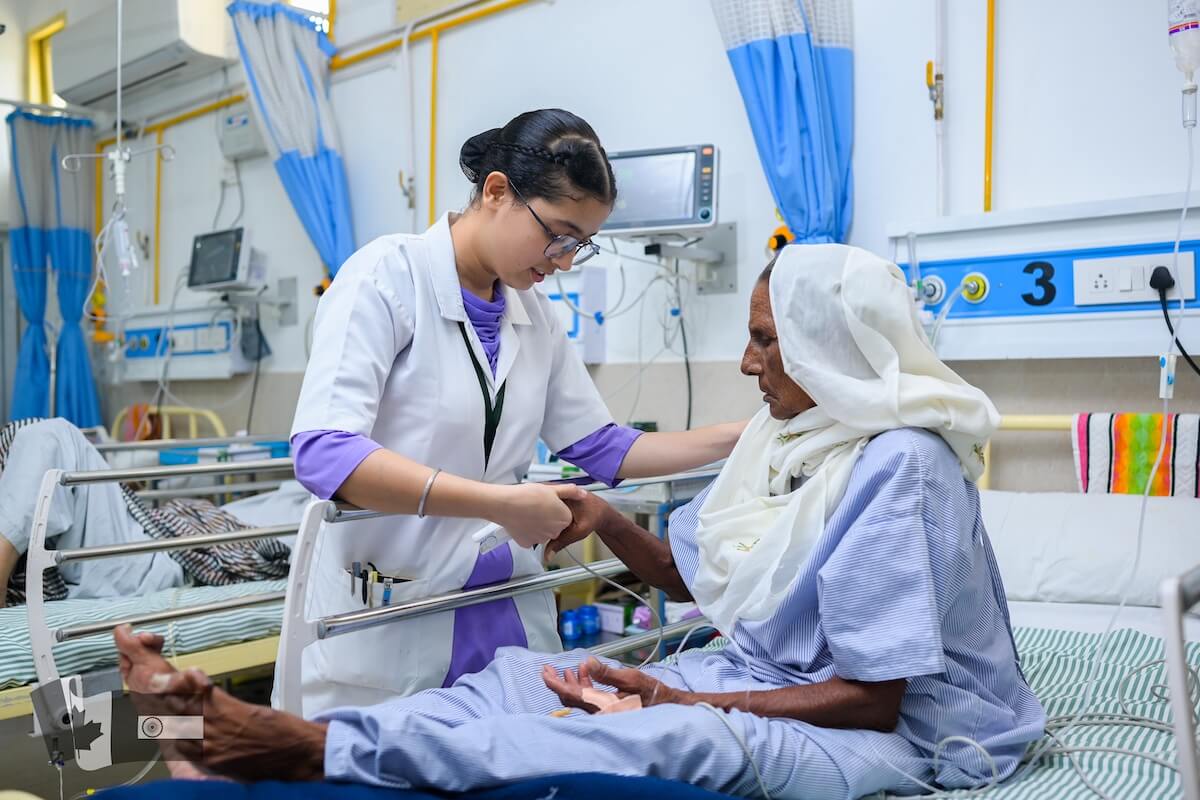
Harjot’s parents continue to support her through a General Nurse and Midwifery (GNM) program at Guru Nanak College of Nursing. It sits next to the high school she graduated from—a 15 minute drive from her home.
“They put all their expectations on me, that’s why they are paying” she explains, without a hint of complaint. “I want to settle my parents financially and motivate my sisters to do good in their studies.”
“My older sister is in Canada. She is working in a restaurant. She can not support us,” she unfolds.
Harjot’s younger sisters attend school in a nearby village, for which fees are also due.
Finding relief through bursary giving
With financial burden being a constant weight on Harjot, relief came when she learned she was the recipient of a bursary from Canadian donors. It was worth ₹40,000 (about $630 CAD), covering 40% of her year’s tuition.
“Sometimes I cry about not being able to afford little things,” she says. “I tell my parents we can’t pay the fees. But they tell me: ‘you have to study. We will find the money, but you have to study’…
“The bursary was a great relief to me.”
Nursing as a pathway for Harjot’s future
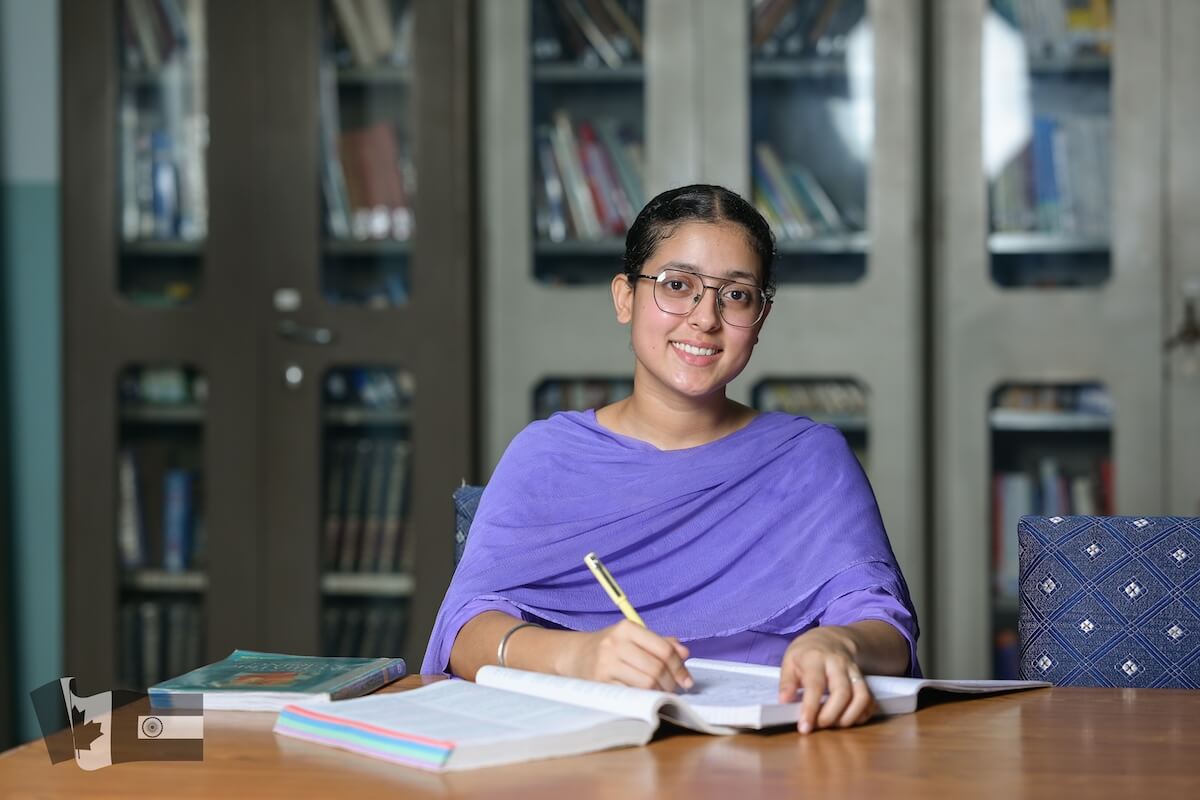
Harjot didn’t always think she would go into nursing. In high school, she took a commerce stream.
When she was ready to choose her college, her elder sister gave her advice. She herself is a bachelor’s graduate from Guru Nanak College of Nursing, where Harjot now studies.
“She told me whether you want to stay in India or go to another country, nursing has a lot of scope in many fields. There are more career options and the salary is good,” recalls Harjot.
Since her goal was—and still is—to help her parents financially, Harjot saw nursing as her best option.
Planning further studies to advance her career
After receiving her General Nurse and Midwifery (GNM) diploma in 2027, Harjot hopes to achieve a Bachelor of Science in Nursing (BScN). For that, she’ll need to take a two-year, Post Basic nursing program.
“What I find interesting about nursing is how the body functions, how it can be affected. My favourite is mental health nursing; how human beings change and behave, and how to treat them with counselling,” she explains.
Her hope is to work in psychiatric nursing or surgical nursing.
“My parents feel good that I am saving lives. They encourage me to do good in my practical work,” she says.
Committed to her family and their care
While the burden of caring for deaf parents can sometimes be overwhelming, Harjot says it also has its upside.
“I feel really proud they are my parents and I am their support. I will support them in every situation. People say it’s good you are their daughter, and you are doing good,” she says.
“I think I will always live with them and take care of them. But then I think, what would happen if I get married? I will tell my husband to live with my parents. If he agrees, I will marry the man.”
She feels supported by her parents, too. She says her mom shows her around the kitchen.
“I don’t like cooking, but she says you have to learn,” laughs Harjot.
Harjot says she is also close with her younger sisters, Arshdeep and Amarvir.
“We usually create videos on Snapchat, we share our thoughts, we watch movies together. Sometimes we fight a lot with each other,” she says with a giggle.
Join the cause to help more students like Harjot
Harjot’s story is one of many in rural Punjab, where access to education can be transformative for young people and their families.
To help struggling families, we set up a scholarship and bursary fund for students at Guru Nanak College of Nursing in Dhahan-Kaleran, Punjab.
Scholarships, bursaries and student loans are hard to find in India. So are student jobs. Many families struggle to overcome the financial burden of paying tuition.
Whether you give $5 or $5,000, your contribution will make a difference in the lives of real people.
Please consider donating directly towards scholarships and bursaries at the link below.