

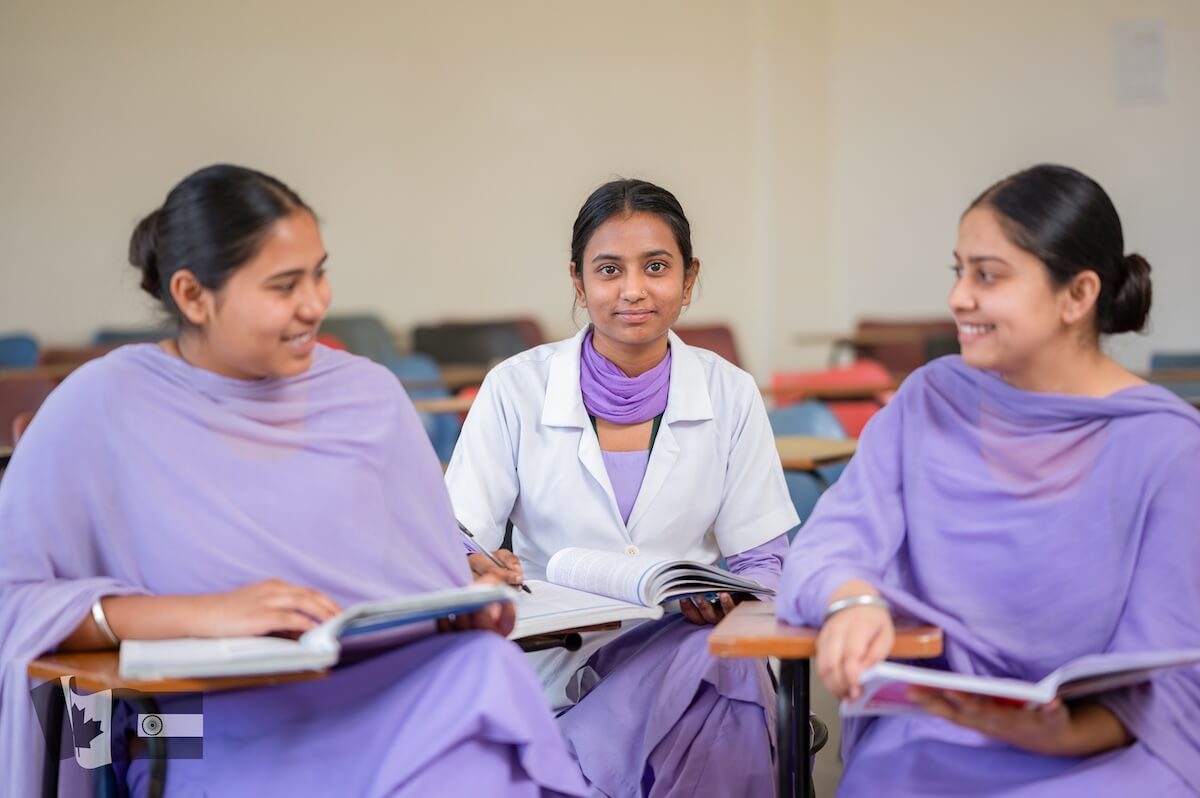
Born in October, 2005, Raj Nandni is the daughter of a gardner who earns roughly $120 to $150 (₹8,000 to ₹10,000) per month. That’s less than half the average wage in Punjab, according to Forbes.
Having only gone to primary school, her parents were tenant farmers who migrated from Uttar Pradesh to Punjab in the early 2000s. Her father found work as a live-in labourer on the grounds of Guru Nanak Mission Medical & Educational Trust, where his children were born and raised.
However, they determined that their three children would study.
“Because they are not educated enough, this is the only job they can do. They think if we are not educated… they don’t want their children to also become like that,” explains Raj.
To pay tuition and make ends meet, Raj’s father works two jobs. He spends weekdays maintaining the grounds of Guru Nanak Mission Medical and Educational Trust. On evenings and weekends, he moonlights as a gardener for private homes, earning $30 here and there (approximately ₹2,000).
The family expected finances to get tighter when Raj and her elder sister, Poornima, grew old enough to attend Guru Nanak College of Nursing.
Poornima received her bachelor’s in 2024 and Raj followed in the General Nurse and Midwifery (GNM) program in 2023. Their brother continued his high school studies.
For a while, they managed. Their mother picked up work as a menial helper at the nearby school. The nursing college and high school gave some tuition relief.
A crisis of life and death…and financial burden
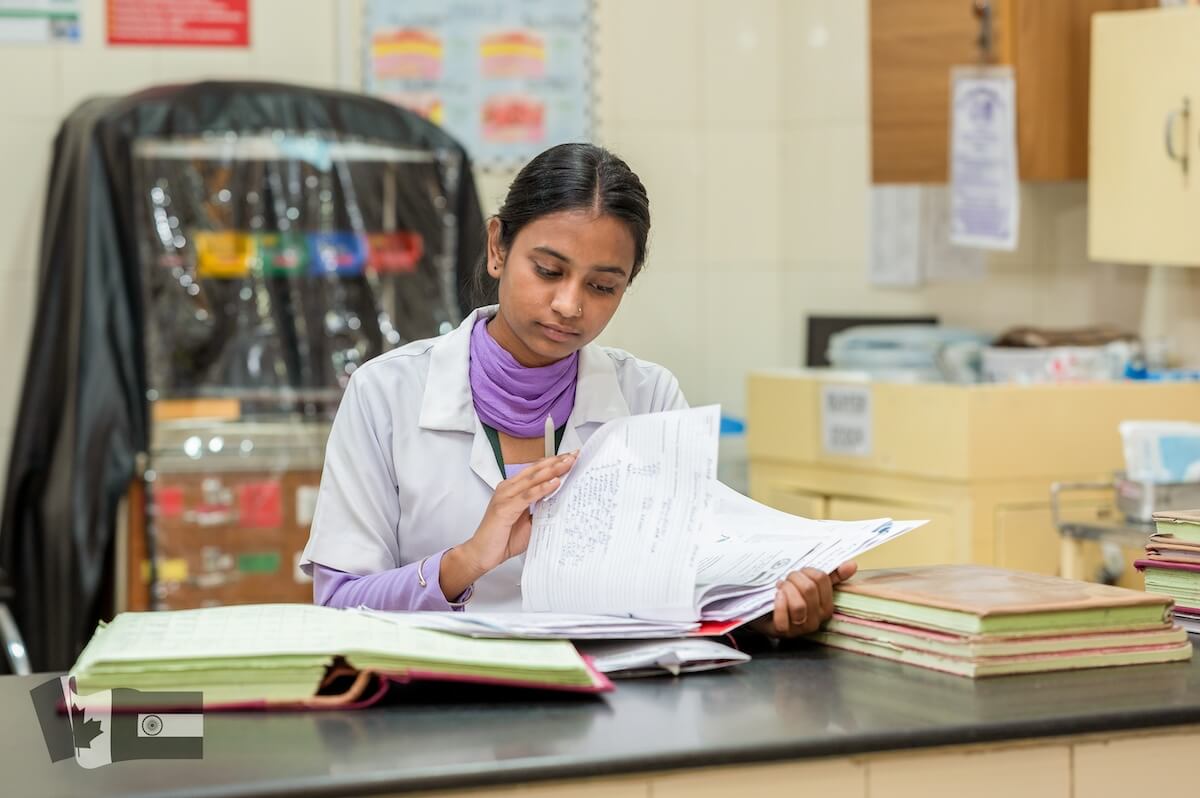
While checking for dengue in 2024, Poornima’s blood test read tragic news: she had leukemia.
Paying for treatment would come to ₹1 million or more ($15,000 CAD) – over 10 times her father’s salary.
Without a way to pay, the family didn’t know what to do. India’s healthcare system is not publicly funded; patients are billed directly.
There was also the consideration of Raj and her brother’s school fees.
“God helped us,” explained Raj. “But last year was very difficult for us. There was a lot of financial crisis in our life. It was like a mountain falling on our heads.”
The family received some concessions from Guru Nanak Mission Hospital, on the campus where they live. The organisation also transported Poornima to her chemotherapy treatments at CMC Ludhiana, about 1.5 hours away. It was a task her family could not do or afford on their own.
“This institute helped us a lot,” explains Raj, who was born on, and still resides on the campus.
However, acquiring debt was an inevitable part of the process. Private loans allowed them to pay for treatment.
Poornima recovered, and the family learned deep lessons from the experience.
“I learned that time is not stable, that life goes on – sometimes there are upliftments and sometimes there is a downfall. Life is not the same,” ponders Raj.
Continuing to follow the dream
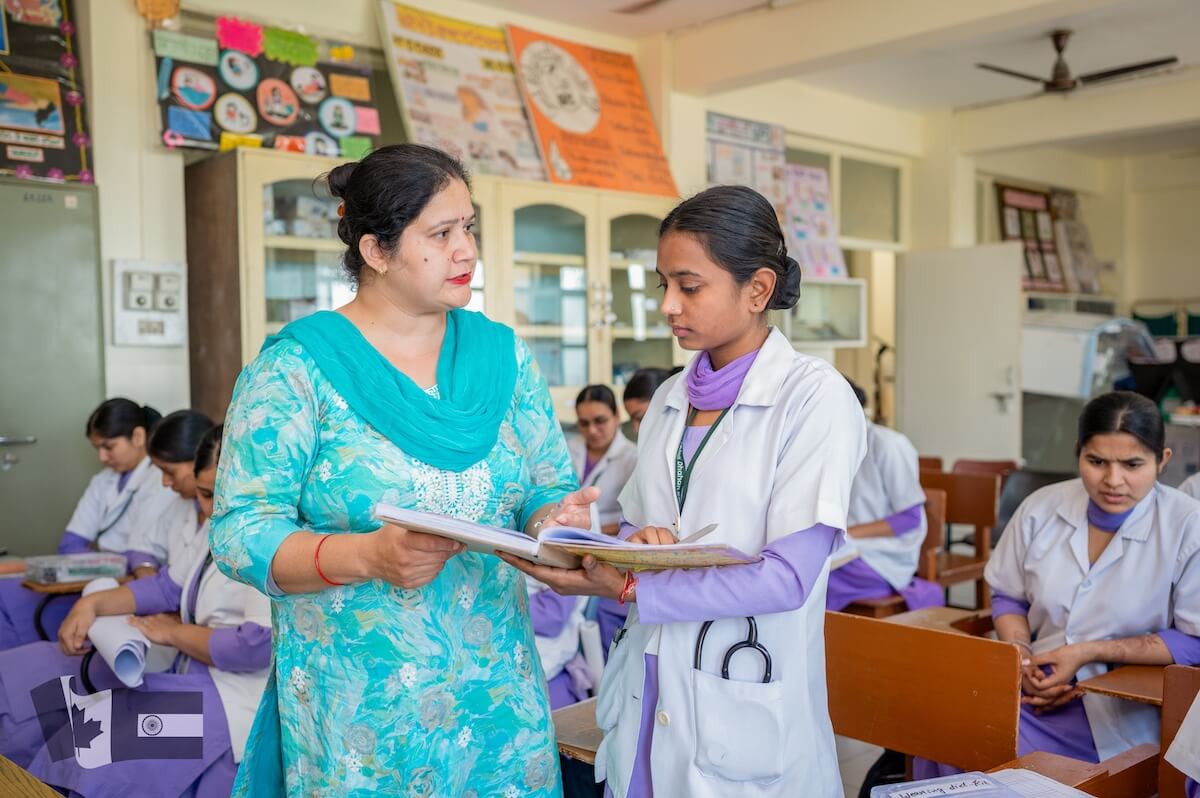
In their struggle, the family persisted with education. Having grown up in poverty, Raj’s parents wanted more for their children.
“My mother and father want to see me as a nurse. There is a dream that I will be financially independent and able to fulfill their dreams as well,” explains Raj. “They want to see my future bright.”
“For me, from a poor family, it’s a dream,” she continues.
Relief from bursary giving
It was of great relief when, in 2025, Raj learned she was chosen to receive a bursary, thanks to donors from Canada.
Canada India Education Society (CIES) transferred her ₹30,000 (about $445 CAD). It went straight to her bank account and covered about 30% of her tuition for the year.
“My father was depressed about how they can pay off this large amount of money for my school fees,” says Raj. “Government scholarships are not available to me.”
“With these bursaries, we want to help as many young people as possible,” explains Barj S. Dhahan, founder of CIES. “There are hundreds, if not thousands of stories like Raj’s. They all deserve a chance; they work and they put in their best. But it takes donations to lift them out of poverty.”
Setting goals for her future
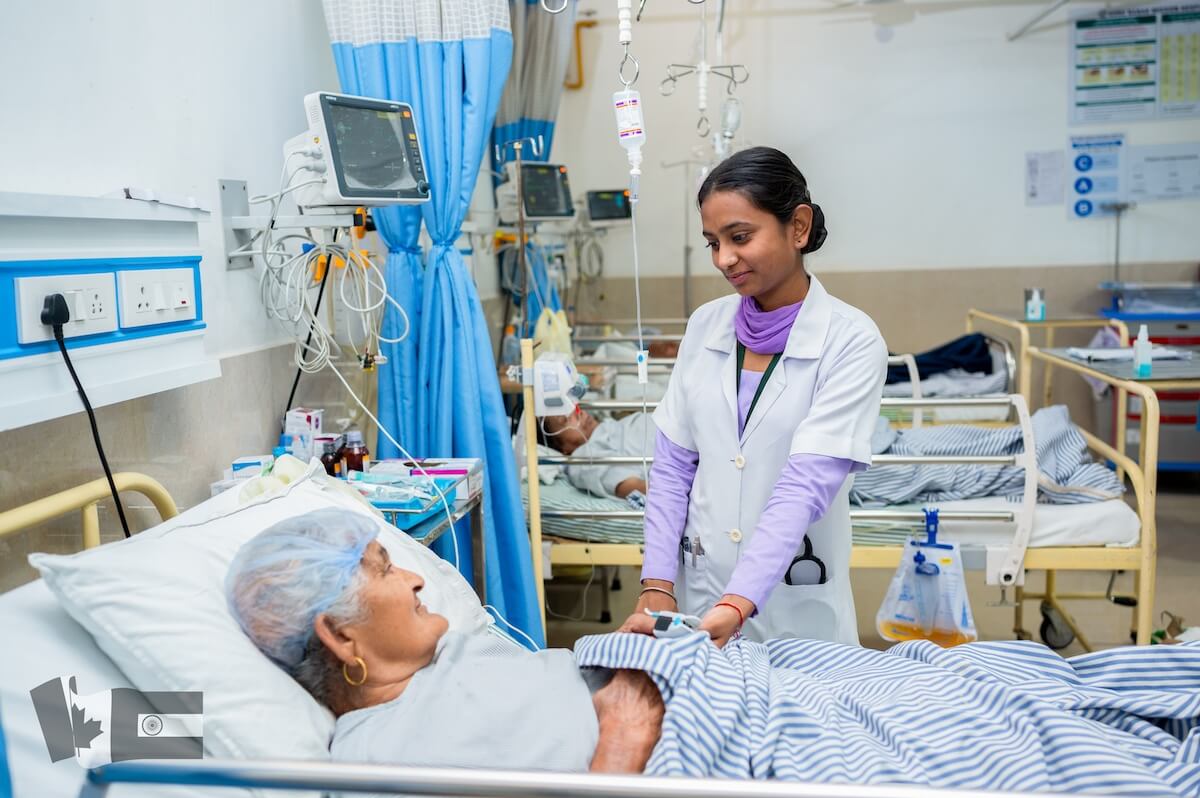
Raj is set to graduate in December, 2026. If possible, she hopes to complete her two-year, Post Basic Bachelor of Science in Nursing (PB BScN). The program would grant her a bachelor’s degree, and thus, higher pay.
She has aspirations of becoming a nurse in a hospital. She says she loves child health nursing and psychiatric nursing.
“[Mental health patients] are totally separated from their families. I want to give them emotional support,” she says.
Supporting her family
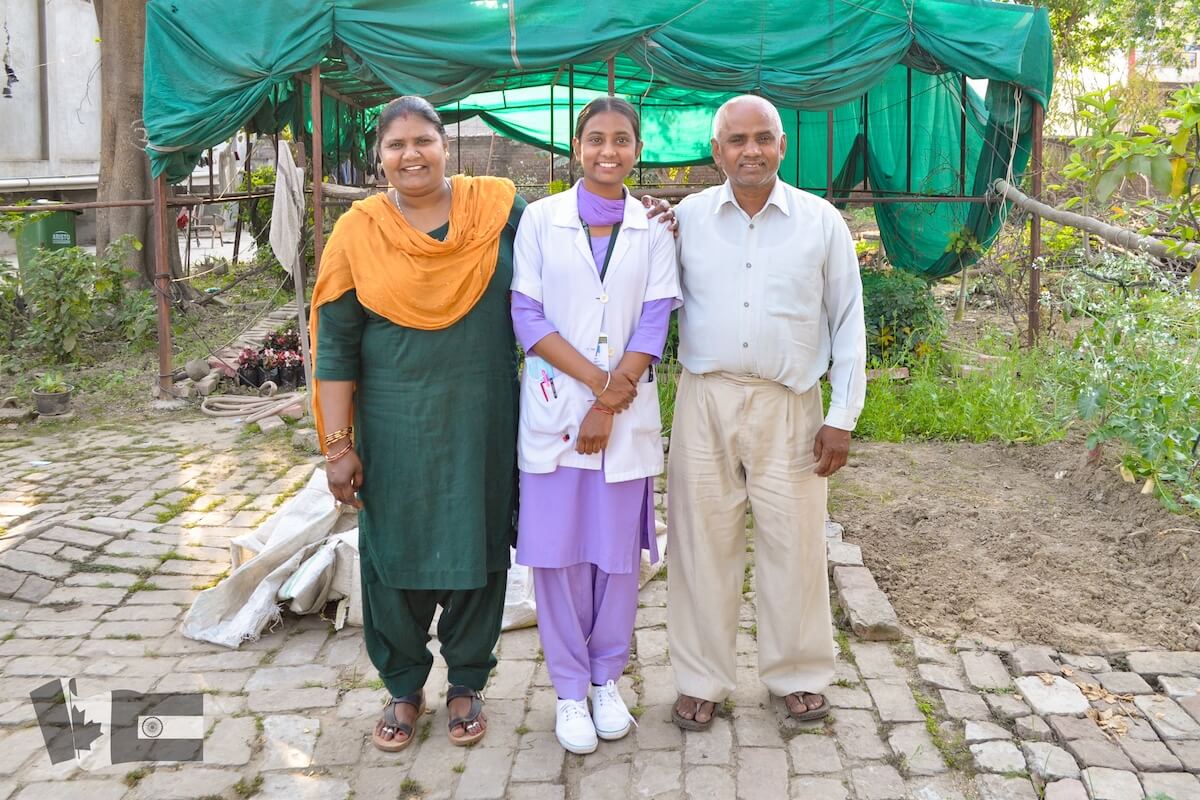
While Raj studies, she also supports her family with housework and by taking care of her younger brother.
“I help him solve math problems and teach him science and social studies. I play with him and we go outside,” she describes.
Her encouragement for others
When asked what her advice would be for others in her shoes, Raj responded:
“Continue your studies as fully as possible…don’t interrupt your dreams. Whatever you can do, you do.”
Help more students like Raj
We provide an annual scholarship and bursary fund to support nursing students in rural Punjab, India, helping young people pursue careers in healthcare.
In India, scholarships, bursaries, student loans, and student jobs are limited. Many families struggle to afford post-secondary education.
This work is only possible with donor support. Every contribution—whether $5 or $5,000—directly supports students in need.
You can donate to nursing scholarships and bursaries at the link below.
https://www.cies.ca/bursary-scholarship-donations/